Blog

  • Pneuma by Brent Fariss


    Pneuma is a work for three wind players and harmonium, distributed throughout the performance space. The wind players move through the room, while the harmonium remains rooted at its center. The word pneuma comes from the Greek for breath, wind, or spirit. In this piece, breath is both sound and metaphor: it enters, moves, gathers, and disperses, becoming tone, noise, resonance, and silence. I imagine Pneuma as a beautiful white-noise machine—an immersive field of breath, air, harmonic resonance, and noise that surrounds and bathes the listener. At first, the sounds may seem formless, but gradually relationships emerge: harmonies, beating frequencies, unexpected moments of consonance, flashes of something luminous within the noise.

    At the center of this field is the harmonium player, the Scallywag: flawed, resistant, and a little absurd, unsure what to do with what is being offered to him. Sometimes the Scallywag asks the winds to stop. So they stop. They do not argue or insist. They wait. And still, the breath returns. This gesture sits at the heart of the piece. The love imagined here does not force itself into the room or demand readiness or worthiness. It can be refused without disappearing; it can wait in silence. And when there is an opening, however small, it returns. The Scallywag is a character, but perhaps also something familiar: the part of us that longs to change yet resists change at the same time, the part that struggles to receive something it does not believe it has earned.

    The world beyond this room can be frightening and uncertain. There are things we cannot protect one another from, and things we cannot always make sense of. Pneuma is a small attempt to imagine another possibility: a space where, for a little while, we can set some of that down; where we can be with one another without fear of judgment, and where nothing has to be proven before we can belong. A space where we can arrive imperfectly, resist, listen, breathe, and perhaps begin again. As the piece unfolds, the boundaries between the individual instruments gradually dissolve. What begins as resistance becomes listening; what begins as separation becomes participation. The piece does not ask us to become perfect. It asks what might happen if love remained present anyway. And still, the breath returns. For a while, we simply breathe together.

    Players:

    Joelle Simone Morales – bassoon
    Jess Griggs – trombone
    Josh Ronsen – clarinet
    Andrew Stoltz – harmonium

    Composer: Brent Fariss

    Brent Fariss is a composer / performer living in Austin, Texas. He has collaborated in several modern music settings including the Goliath Was Bigfoot, Waco Girls, and the Austin New Music Coop. He has become increasingly interested in the idea of conceptualism; using minimalist techniques to unite texture, form, resonance, and abstracted programmatic ideas to create a musical environment.

    https://brentfariss.bandcamp.com

    This piece will open up the evening in the Learning Gallery at KMFA
    6:30pm on Saturday, 10/10/2026

    The Sarah Hennies & Tristan Kasten-Krause performance will follow in the Draylen Mason Music Studio at 7:30 PM.

    Save your seat here via Ticketleap
    Cash and Venmo also accepted on site.
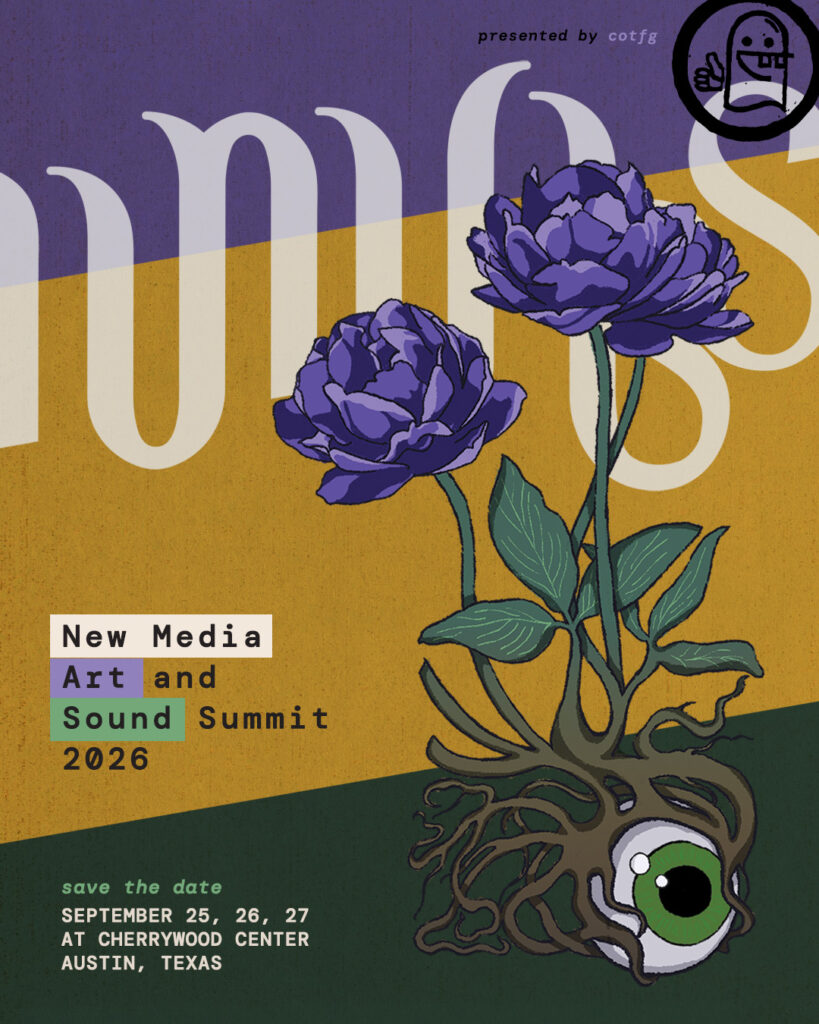
  • Save the Date!

    Support our New Media Art & Sound Summit 2026 by saving your seat here
    Sign up for a volunteer shift here

    Graphic design by Recspec

  • Land Acknowledgement

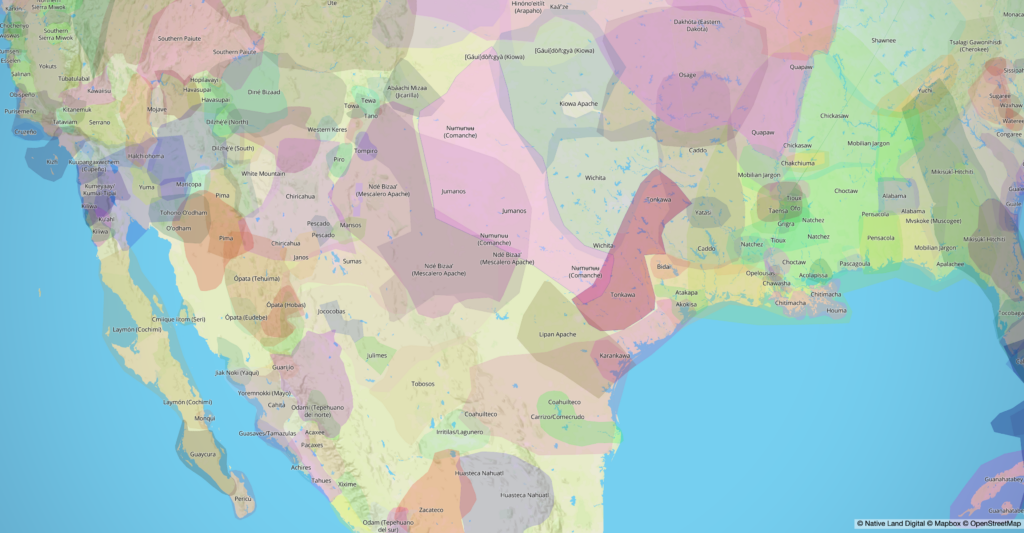
    We acknowledge that we exist on the ancestral and traditional homelands of the Indigenous Peoples of Central Texas and Turtle Island, which may have included: the Lipan Apache, Comanche, Tonkawa, Carrizo & Comecrudo, Coahuiltecan, Caddo, Alabama-Coushatta, Kickapoo, Tigua Pueblo, and the many other Indigenous nations and communities who have cared for these lands since time immemorial.

    We recognize that the displacement and forced removal of Indigenous Peoples made possible the development of the society that exists here today, and we honor the resilience, stewardship, and enduring presence of Indigenous communities past, present, and future. As we celebrate and care for this land, we do so with gratitude and respect for those who have long nurtured and protected it.

  • Music Research Strategies : De-Center for Unknowing

    In August we are collaborating with Music Research Strategies on a community building activity:

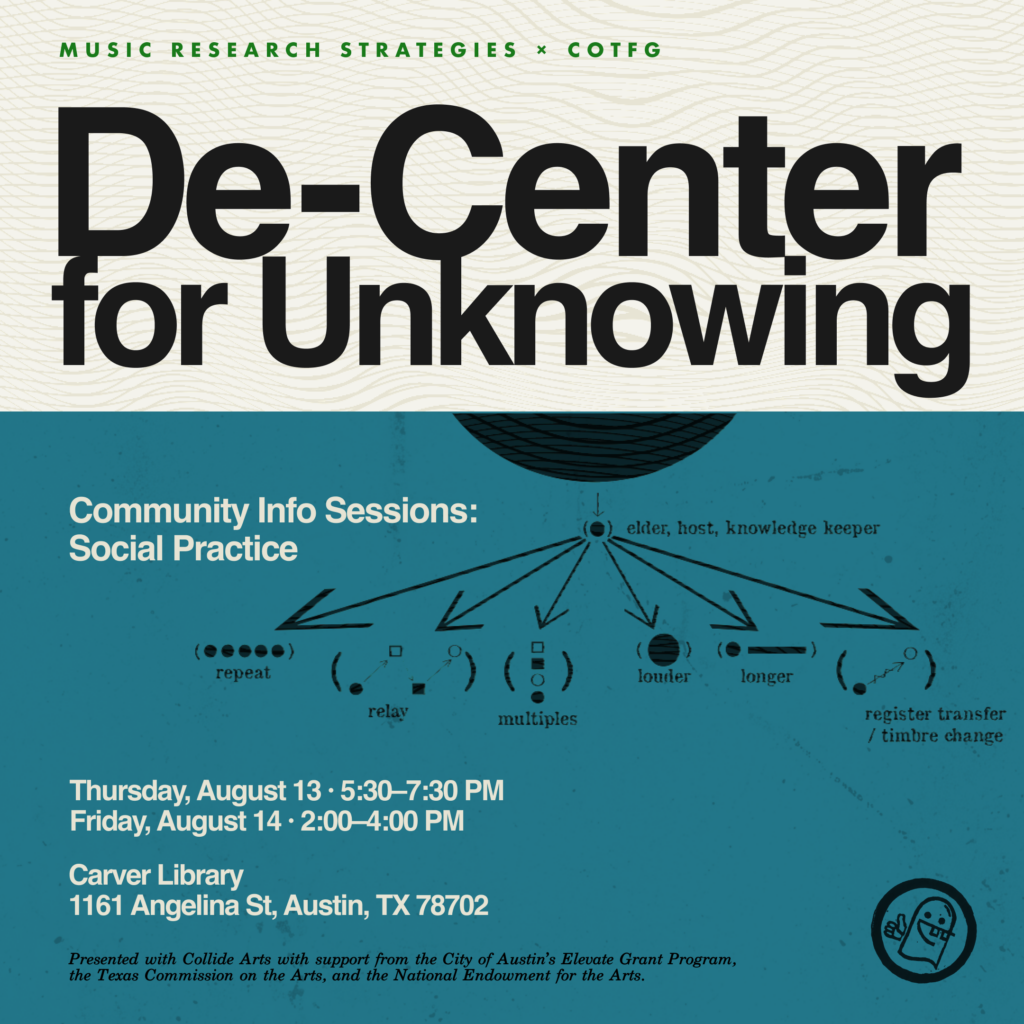
    De-Center for Unknowing at Carver Library ** August 13 & August 14 **
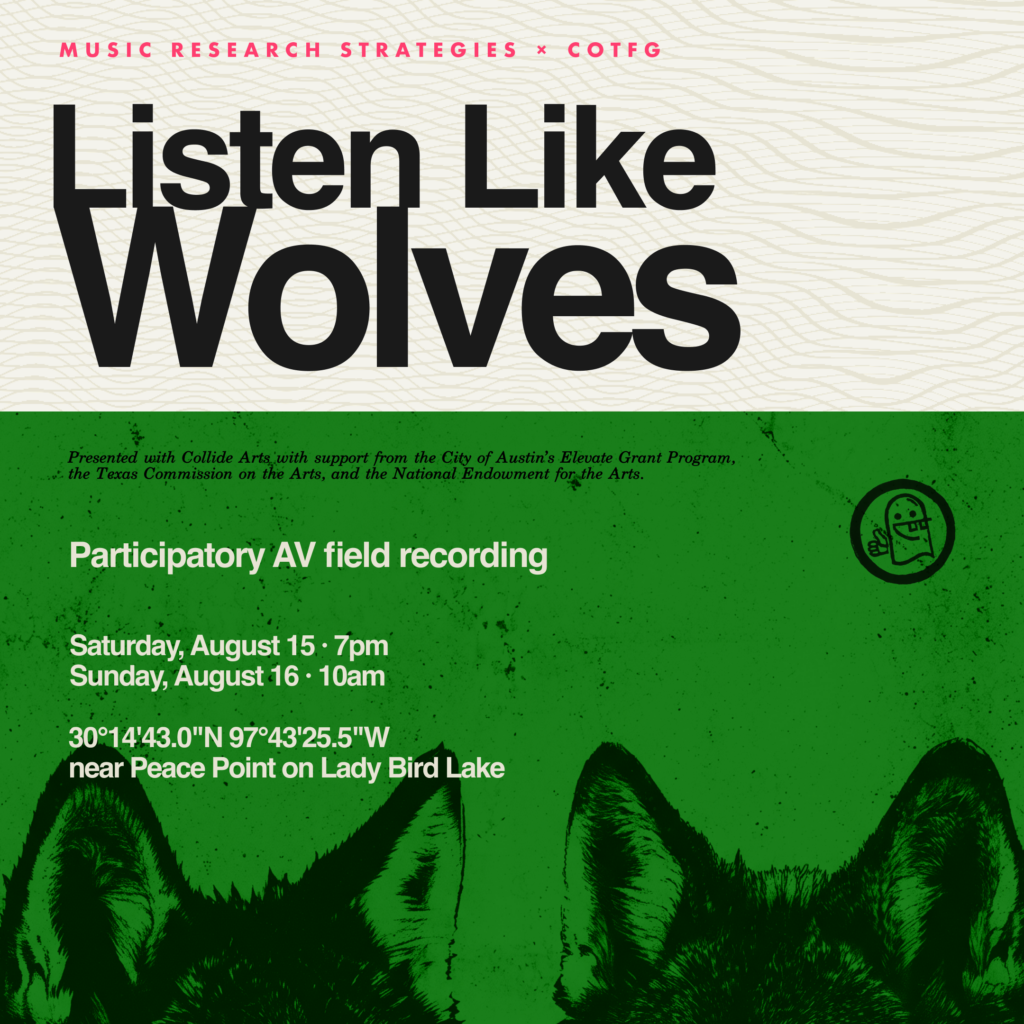
    Listen Like Wolves near Peace Point – Lady Bird Lake ** August 15 & August 16 **
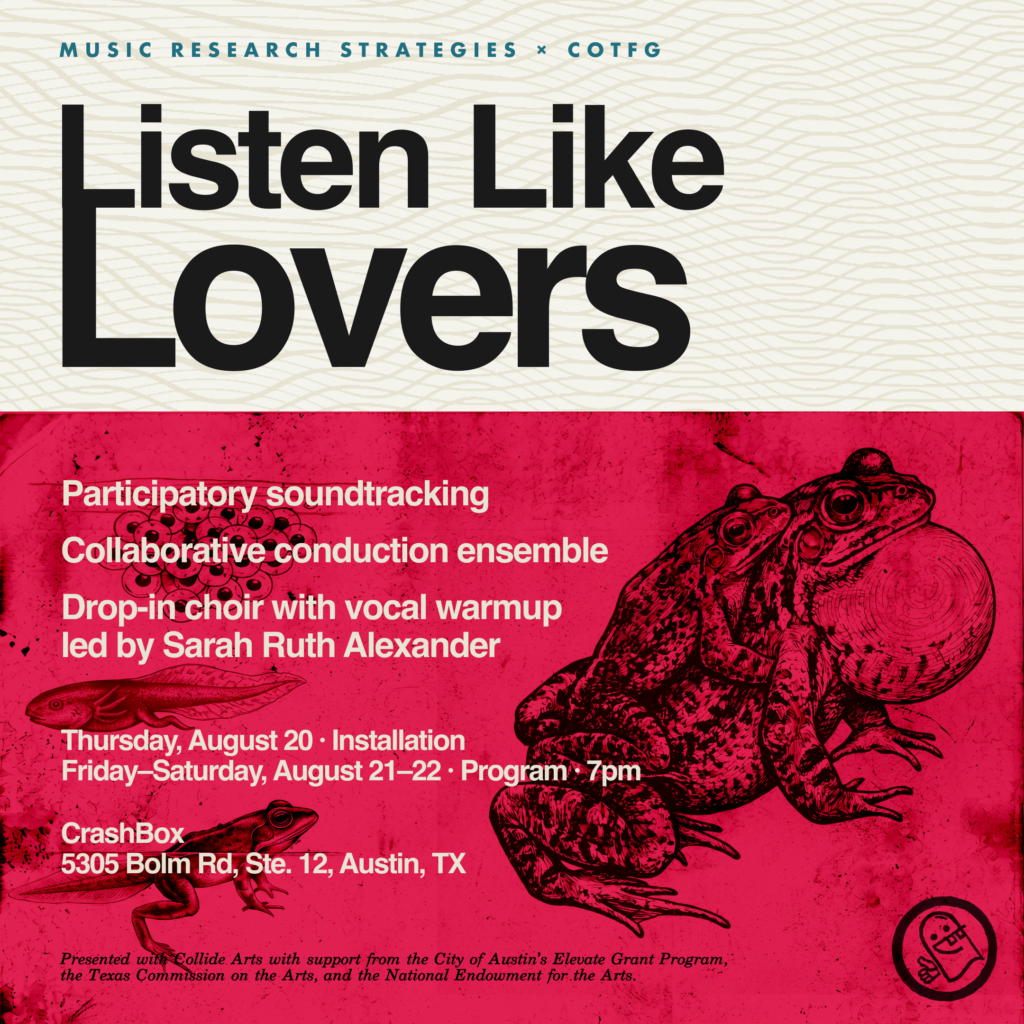
    Listen Like Lovers at Crashbox ** August 20 through 22 **

    On Saturday August 15, Sunday August 16, you are invited to contribute six digital files of the movement of water, as illustrated in the provided graphic score, to a digital community archive that be sourced for a public installation screening as part of a performance curriculum for a Walk-in Choir, Audience-led Creative Music Conduction and Live Sound Track Recording for the developing of a 50-state, De-Center for Unknowing (DCU) Initiative to address the concerns presented in “Dispatch 1-3” and the realization of the ENLA: Floating Signifier, a solo performance vernacular digital community archive, single and multi-channel video composition, walk-in choir, audience-led conduction and documentation.”

    The graphic score is Schematic 1 from this link: https://disclaimer.org.au/contents/unsettling-scores/dispatch


    Presented with Collide Arts with support from the City of Austin’s Elevate Grant Program, the Texas Commission on the Arts, and the National Endowment for the Arts.

    Here is a web version of our mailing list invite which was sent out in June/July.

    To prepare your minds, you may consider reviewing this material:

    “Thinking Spaces: Raven Chacon and Candice Hopkins.” in conversation with Vijay Heble, Chair and Founder of the International Institute of Critical Improvisation Studies at Guelph University, Guelph, ON and the bilingual Journal of Critical Improvisation Studies.

    “Dismantling Racism in Public Art” produced by Soros Fellow and former San Francisco Arts Commission Senior Grants Manager

    Corinne Gould (Ohlone), from Sogorea ‘Te Land Trust, in Living on Ohlone Land: Building Reciprocity with Indigenous Communities (2017) and “Living On Ohlone Land” (2018) and Barbara Mumby-Huerta’s (mestiza) Dismantling Racism

    Contact Music Research Strategies with specific questions.